Meta Deploys Google TPUs in Production, Challenging Nvidia's AI Hardware Grip
The integration of Google’s custom silicon into Meta’s infrastructure marks a pivotal shift in the AI computing landscape, offering a native PyTorch alternative to Nvidia’s dominant ecosystem.
By Yasmin Farouk ·
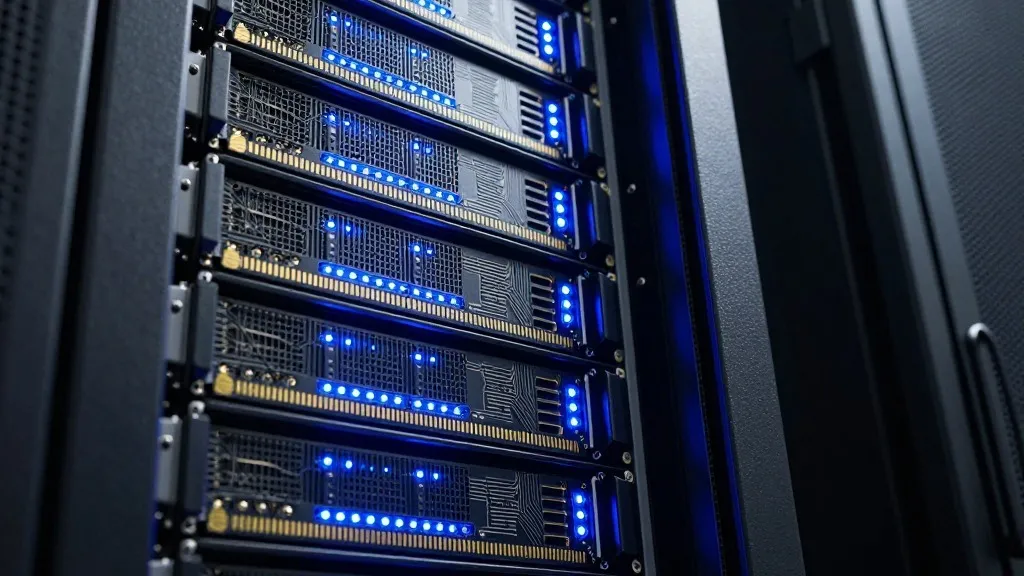
The exclusive dominance of Nvidia in the artificial intelligence chip market faces its most significant structural challenge yet as Meta begins running Google’s tensor processing units in live production environments.
The move, announced via Google’s developer blog, confirms that Google’s custom AI hardware is no longer confined to internal use or limited cloud rentals but is now a viable, native option for major external tech giants. This development signals a maturing of the TPU ecosystem, allowing it to compete directly with Nvidia’s GPUs on software compatibility rather than just raw hardware specifications. For the broader industry, it suggests that the 'walled garden' of AI infrastructure is cracking, giving large-scale operators more leverage in procurement and deployment strategies.
The technical cornerstone of this shift is the release of PyTorch-native versions of the SGLang inference engine and the open-source vLLM engine. Previously, running workloads on TPUs required the use of Google’s proprietary JAX framework, a barrier that often deterred teams standardized on PyTorch. The new versions allow these engines to run natively on PyTorch without extensive code rewriting. Zongwei Zhou, Meta’s PyTorch-TPU lead, stated that "SGLang-TorchTPU is running in production at Meta today," attributing the success to a close three-way collaboration between Meta, Google, and the SGLang team. This integration provides Meta with what Zhou described as a "remarkably mature, PyTorch-native serving stack," effectively removing the software friction that has historically kept TPUs out of mainstream PyTorch workflows.
Strategic flexibility is the primary driver behind Meta’s adoption of this technology. Jana van Greunen, director of PyTorch engineering at Meta, emphasized that the company "cannot be constrained by a single hardware architecture." By enabling the deployment of PyTorch workloads directly to Google TPUs, Meta diversifies its hardware portfolio. This is not Meta’s first foray into TPU technology; older bridges like PyTorch/XLA were used by Meta research teams from 2020 to 2023. However, those earlier contracts were canceled, and the new TorchTPU initiative represents a more robust, co-developed solution aimed specifically at retaining Meta’s existing PyTorch infrastructure rather than forcing a migration to JAX.
The timing of the announcement is strategically significant, landing just one day after Amazon revealed it was open-sourcing TorchNeuron, its native PyTorch backend for Trainium2 and Trainium3 chips. Both moves appear designed to loosen Nvidia’s software lock-in, which has long allowed the company to maintain high margins and market control through its CUDA ecosystem. By providing native PyTorch support for alternative silicon, Google and Amazon are lowering the switching costs for major AI labs. Reports indicate that Meta’s production TPUs may be located in Google Cloud facilities, with talks last year suggesting rentals in 2026 and purchases in 2027, followed by a multi-year rental agreement. This hybrid model allows Meta to scale capacity without the immediate capital expenditure of buying hardware, while still gaining the performance benefits of specialized silicon.
Performance benchmarks further validate the viability of this shift. A tuned vLLM setup serving Moonshot AI’s 2.8-trillion-parameter Kimi K3 model reportedly achieved over 700 tokens per second for a single user on the seventh-generation Ironwood TPU. This figure, provided by Inferact, the startup behind vLLM, outperforms vLLM’s published setup on 16 Nvidia GB200s, which reached 452 tokens per second. The test utilized 16 Ironwood chips with speculative decoding. Additionally, kernels for Kimi K3 and Qwen 3.8 27B deliver roughly 1.4 to 2 times the throughput of the GB200 baseline at small batch sizes without speculative decoding. These metrics suggest that for specific inference workloads, TPUs now offer competitive or superior efficiency compared to Nvidia’s latest hardware, provided the software stack is optimized.
Looking ahead, the ecosystem is set to expand rapidly. SGLang-TorchTPU will continue adding model support, starting with DeepSeek V4.1 Flash and Reflection Beam. RadixArk, the startup founded by SGLang’s creators, aims to achieve Day 0 TPU support for new open models by the first quarter of 2027, ensuring that new AI models are immediately deployable on Google hardware. Google, Meta, and RadixArk plan to share further details at the SGLang Summit 2026, scheduled for November 12–13 in San Francisco. As the software barriers erode, the balance of power in AI hardware may shift from a single-player monopoly to a more competitive, multi-vendor landscape.
Source: Tom's Hardware