NASA Reveals 22 Starship Launches Needed for Lunar Landing
A new internal estimate suggests the Artemis program requires significantly more orbital refueling operations than previously projected, raising questions about the timeline for crewed moon missions.
By Tunde Adeyemi ·
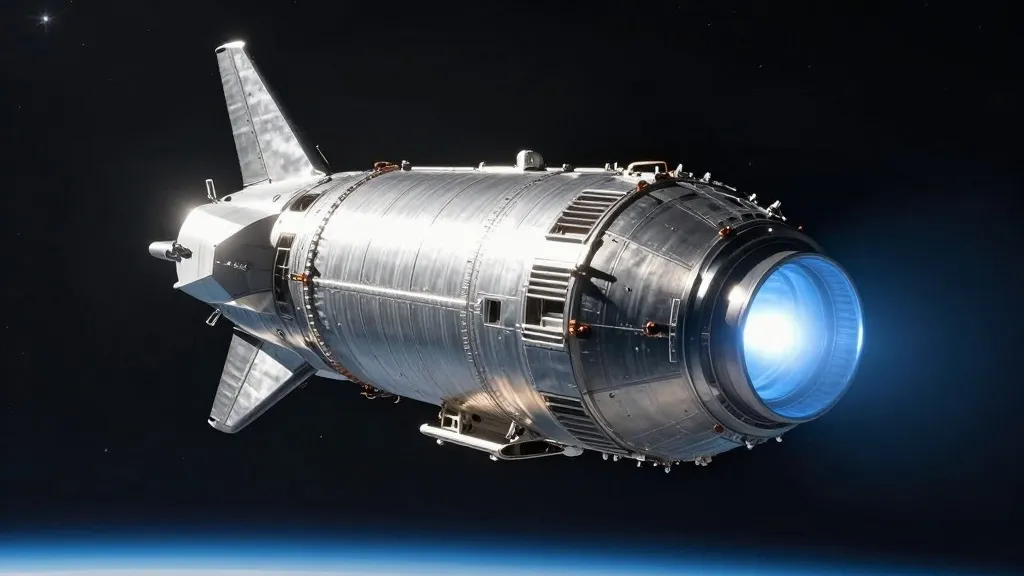
NASA has disclosed a new benchmark for its Artemis lunar landing efforts, indicating that 22 launches of SpaceX’s Starship vehicle are required to support a crewed mission to the Moon. This figure represents the total number of orbital refueling operations necessary to prop up the lunar lander with liquid oxygen and methane before it can depart low-Earth orbit, land on the lunar surface, and return to orbit. The revelation marks a significant shift in transparency for a metric that the space agency has historically guarded with intense caution.
The agency's reluctance to pin down this number stems from its critical role in the overall mission architecture. For years, NASA officials have treated the required launch count as a sensitive variable, often responding to inquiries with vague assurances that they were still calculating the precise logistics. In 2023, Lisa Watson-Morgan, who served as the director of NASA’s Human Landing System at the time, acknowledged that the agency had a general idea of the scope but was hesitant to provide an exact figure. She later characterized the requirement as falling within the range of high single digits to low double digits, suggesting a total of roughly a dozen launches.
Subsequent comments from other officials pushed the estimate higher, with some citing the high teens as a more realistic scenario. These varying projections relied heavily on the assumption that SpaceX would rapidly increase the lift capacity of the Starship rocket. Such an improvement would theoretically allow each tanker flight to transport more propellant, thereby reducing the total number of trips needed to fill the depot in orbit. The strategy depended on a steep learning curve for the vehicle to become more efficient over a short period.
However, concerns are mounting within NASA that this dramatic improvement in lift capacity may not materialize soon enough to keep Starship central to the Artemis goals for the current decade. The new estimate of 22 launches suggests that the logistical burden of orbital assembly is heavier than previously modeled. This higher number implies a more complex and prolonged campaign of tanker flights, each dedicated to topping off the propellant stores of the depot Starship waiting in low-Earth orbit.
The figure was highlighted during a quarterly meeting of the NASA Aerospace Safety Advisory Panel held on Thursday. Panel member Charlie Precourt, a former NASA astronaut, discussed the specific risks associated with the Artemis program and the challenges of landing humans on the Moon. His remarks underscore the operational complexity involved in orchestrating multiple heavy-lift launches in close succession.
Looking ahead, the Artemis team must now integrate this 22-launch requirement into its scheduling and risk assessment frameworks. The increased number of orbital refueling events amplifies the potential for failure points and extends the window of vulnerability for the mission. As the agency moves forward, it will need to balance the pace of Starship development with the rigid timeline for returning astronauts to the lunar surface, ensuring that the logistical chain holds together under pressure.
Source: Ars Technica